The PNEUMONIA Times
Novel tea tree oil nanoemulsions for inhalation therapies of bacterial and fungal pneumonia

Instead of using antibacterial agents to treat pneumonia, a novel nano-formulation of tea tree oil (nanoTTOs) can be administered to patients. The nanoTTOs has shown high anti-Candida albicans effect than antibiotics such as fluconazole, which is usually administered to patients with pneumonia. The inhaled nanoTTOs would be an ideal medicine for the therapy of fungal or bacterial pneumonia.
As we understand, the clinically available range of antifungal agents is small and drug resistant strains are rising. Thus, an alternative antifungal agent, nanoTTOs, is a preferred therapy of fungal pneumonia. Azole antifungal agents prevent the synthesis of ergosterol, a major component of fungal plasma membranes.
References:
- Miao, L, Zhua, L, Liua, b, Dua, L, Jiac, X, Hanc, L (2016). Tea tree oil nanoemulsions for inhalation therapies of bacterial and fungal pneumonia. Sciencedirect. Retrieved 12th Feb 2016, from <http://www.sciencedirect.com/science/article/pii/S0927776516300972>
Solithromycin treatment: Non inferior to moxifloxacin for pneumonia
Results in a clinical phase III shows that a 5-day regimen of oral solithromycin may be clinically non inferior to a 7-day regimen of oral moxifloxacin for the treatment of community-acquired bacterial pneumonia.Solithromycin, a next-generation macrolide, has a similar safety profile to moxifloxacin and could offer providers an alternative to the β-lactam and fluoroquinolone-based treatments.
It is important that an effective, single-dose, oral treatment such as solithromycin to be taken so as to protect population that are at risk of contracting both gonococcus and chlamydia.
References: http://www.healio.com/infectious-disease/respiratory-infections/news/online/%7Bcf4cf6fd-b59f-41bf-ab89-af93067421e3%7D/oral-solithromycin-noninferior-to-oral-moxifloxacin-for-pneumonia
Corynebacterium accolens: Possible inhibitor of Streptococcus pneumoniae

The presence of a harmless bacteria, Corynebacterium accolens, may inhibit the growth of Streptococcus pneumoniae, a pathogen that causes otitis media, sinusitis, pneumonia and meningitis.
Future studies might be conducted to determine whether C. accolens could be used to control colonisation of S. pneumoniae.
References: http://www.techtimes.com/articles/123195/20160111/good-bacteria-may-inhibit-growth-of-pathogen-causing-ear-infection-and-pneumonia-examples-of-food-high-in-good-bacteria.htm
Aerosolized Colistin for Ventilator-Associated Pneumonia

One of the Polymyxins, known as colistin, are currently used as a last-resort treatment of multidrug-resistant (MDR) bacterial infections caused by Pseudomonas aeruginosa, Acinetobacter baumannii, and Klebsiella pneumoniae.
Colistimethate sodium is a prodrug which is broken down to colistin in the body. Be cautious when taking colistin as it may potentially lead to a case of fatal airway irritation upon ingestion.
Inhaled colistin were determined in patients with ventilator-associated tracheobronchitis because P aeruginosa, A baumannii, or K pneumoniae are susceptible only to polymyxin. Patients received 1 million IU of nebulized colistimethate sodium (30 mg colistin base) every 8 hours for 7 days. Cure was achieved in 16 of 20 patients, but colistin concentrations in epithelial lining fluid declined below the MIC values by 8 hours in 8 out of 20 patients. Patients with pathogens susceptible to β-lactams were included as a control group and treated with intravenous antibiotics for 14 days. Patients with MDR organisms were treated with nebulized colistimethate sodium 5 million IU (150 mg colistin base) every 8 hours for 7-19 days. In the nebulized group, 67% were clinically cured at the end of treatment compared with 66% in the control arm treated with intravenous β-lactams.
The optimum dose of nebulized colistin for patients with MDR pathogens is not fully clear due to a lack of randomized trials, but higher-dose regimens have been used successfully without significantly increasing the risk for nephrotoxicity.
References:
- http://www.medscape.com/viewarticle/848388
- Valachis A, Samonis G, Kofteridis DP (2015). The role of aerosolized colistin in the treatment of ventilator-associated pneumonia: a systematic review and metaanalysis. Pubmed. Retrieved 29th December 2015, from <http://www.ncbi.nlm.nih.gov/pubmed/25493971>
Pore-Forming Toxins Induce Macrophage Necroptosis during Acute Bacterial Pneumonia
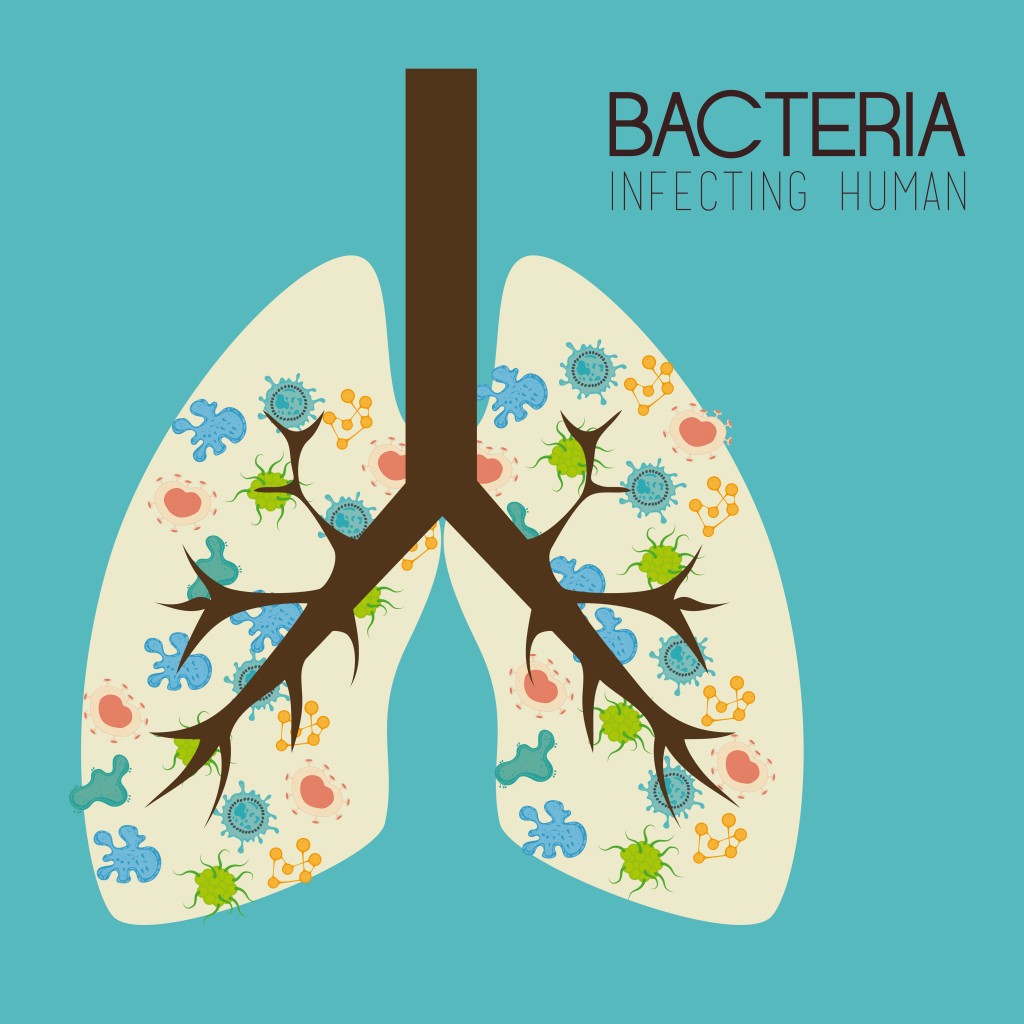
Various bacterial pathogens produce a pore-forming toxin (PFT) that induce necroptosis of macrophages and this can prevent protection against Serratia marcescens hemorrhagic pneumonia. Staphylococcus aureus, Streptococcus pneumoniae, Listeria monocytogenes, uropathogenic Escherichia coli (UPEC), and purified recombinant pneumolysin, macrophages pretreated with inhibitors of RIP1, RIP3, and MLKL are also protected against death. Necroptosis is a pro-inflammatory mode of programmed cell death that is marked by the intentional disruption of host membranes and the release of pro-inflammatory cytosolic components into the milieu. Necroptosis is the principle mode of cell death and is critical for immune activation following injury.
Serratia marcescens is a Gram-negative nosocomial pathogen that secretes a unique PFT called ShlA. S. marcescens causes a broad spectrum of infectious disease, including hemorrhagic pneumonia, and is an increasingly important cause of hospital and community-acquired infections. Importantly, some clinical isolates of S. marcescens have been reported to be Carbapenem-resistant. Necroptosis is the responsible mechanism for macrophage death following their exposure to ShlA. Specific cell signals induced by PFT intoxication that trigger necroptosis can be blocked for therapeutic intervention during hemorrhagic S. marcescens pneumonia.
PFTs are one of the most common virulence factors found in bacteria. Recently, limited research has shown that PFTs induce necroptosis. Research has shown that several of toxins released by S. aureus triggered necroptosis and this resulted in lung damage. Diverse PFT-producing pathogens regardless Gram-negative or positive, extracellular or intracellular, have the capacity to induce necroptosis of macrophages. Hence, necroptosis is the principle cell death pathway triggered in macrophages by sub-lytic but still lethal levels of a PFT.
The effects of PFTs will eventually induce necroptosis in macrophages via membrane disruption that results in ion dysregulation, ATP depletion, and the induction of cellular ROS. These alone are sufficient to induce macrophage necroptosis. These signaling molecules as viable targets to counteract bacterial infections from significant community and nosocomial pathogens.
References:
González-Juarbe N, Gilley RP, Hinojosa CA, Bradley KM, Kamei A, Gao G, Dube PH, Bergman MA, Orihuela CJ (2015). Pore-Forming Toxins Induce Macrophage Necroptosis during Acute Bacterial Pneumonia. Pubmed. Retrieved 23rd December 2015, from <http://www.ncbi.nlm.nih.gov/pubmed/26659062>
Recent concepts in host-microbe interaction leading to pneumococcal pneumonia

Infection with Streptococcus pneumoniae can lead to either a local or invasive disease, having pneumonia as one of the most common manifestations. Despite having pneumococcal vaccines, pneumococcal pneumonia is still the leading cause of community and in-hospital pneumonia in the world.
Streptococcus pneumoniae is an encapsulated Gram-positive microbe that colonizes the human nasopharynx. The virulence factor of pneumococcus is a polysaccharide capsule (CPS) that provides the bacterium with a mechanism of antigen variation and confers serotype specificity. Patients can be infected from asymptomatic nasopharyngeal colonization to local (otitis media) and distant invasive pneumococcal disease (IPD), including meningitis, pneumonia and bacteremia (bloodstream invasion). Pneumococcus is one of the most common and lethal cause of outpatient and inpatient pneumonias, which are associated with substantial morbidity, mortality and rising health care costs, particularly in the elderly.
The capsular polysaccharide gives streptococcus pneumoniae its virulence. A new study found that the longer pneumococcal chain length, the better it facilitates adhesion. Another discovery was made that pneumococcal serotypes undergo microevolution due to mutations in the wcjE (O-acetyltransferase) gene, whereby colonizing strains exhibit phenotypic switching and become invasive strains.
Pneumococcal biofilm formation has also been associated with nasopharyngeal colonization. In one study, pneumococcal serine-rich repeat protein (PsrP), a surface protein and lung-specific virulence factor, promoted bacterial aggregation and biofilm structures in the nasopharynx and lungs of mice. Since genetic material is exchanged among co-colonizing strains of pneumococcus during biofilm growth, the phenotype of one strain could be affected.
New insights into regulation of the pneumococcal biofilm phenotype have begun to emerge. Binding of an agglutinating CPS-specific monoclonal antibody did enhance pneumococcal quorum sensing. These antibodies did not induce phagocyte-mediated bacterial killing in vitro although they were protective in mice, suggesting that antibody-mediated agglutination did not kill pneumococcal growth. Thus, antibody agglutination of pneumococcus does not necessarily benefit the host as the antibodies seen in mice did not induce bacterial clearance.
Other microbes found in the nasopharynx can also influence pneumococcal colonization and invasiveness. Some studies have shown that pneumococcal adherence was inhibited by bacteriocins produced by S. mitis and S. salivarius from healthy children. In one study, virulent pneumococcal serotypes emerged during nasopharyngeal competition with Haemophilus influenzae. However, in another, pneumococcal colonization correlated negatively with α-hemolytic streptococci during asymptomatic viral upper respiratory infection (URI), but in viral URI with otitis media, pneumococcal and non-typeable Haemophilus influenzae colonization each increased while α-hemolytic streptococci decreased.
References:
- Vernatter, J, Pirofski, P (2014). Current concepts in host-microbe interaction leading to pneumococcal pneumonia. Pubmed. Retrieved 2nd December 2015, from <http://www.ncbi.nlm.nih.gov/pmc/articles/PMC4237063/>
Luc Bondy, Swiss opera director, dies of pneumonia at age 67

BERLIN (AP) — Luc Bondy, a Swiss opera, theater and film director who staged productions on renowned stages across Europe and the United States, has died. He was 67.
He was a force at theaters throughout Europe, including Berlin’s Schaubuehne, the Salzburg Festival and Vienna’s Wiener Festwochen, which he led until 2013. He also directed operas and films in a career that spanned more than four decades.
References:
http://www.usnews.com/news/entertainment/articles/2015/11/29/luc-bondy-swiss-opera-theater-director-dies-at-67
https://www.thewrap.com/luc-bondy-swiss-stage-and-opera-director-dead-at-67/
Scientists ‘see’ detailed make-up of deadly toxin which causes pneumonia for the first time
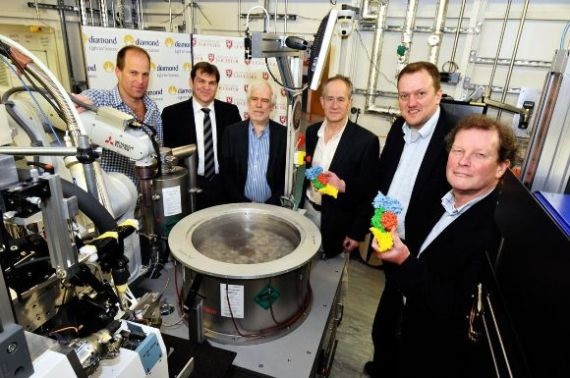
The three-year study involving four research groups from across the University points to the possibility of creating therapeutics that block assembly of pneumolysin pores to treat people with pneumococcal disease. X-ray crystallography is used to view the individual atoms of the toxin. The structure reveals what the toxin looks like and how it assembles on the surface of cells to form lethal pores.
The research is about a toxin called pneumolysin produced by a bacterium called pneumococcus (aka Streptococcus pneumoniae). Pneumococcal infections are the leading cause of bacterial pneumonia. Pneumolysin causes pneumococcus to have the ability to cause disease. The World Health Organization (WHO) estimated that more than 1.6 million people die every year from pneumococcal infections, including more than 800,000 children under 5 years old.
The results obtained from X-ray crystallography is critical to understand how the toxin works. For example, we can see which parts of the toxin come together during pore assembly. When we disrupt these contacts, the toxin becomes inactivated so can no longer kill cells. The mode of action of pneumolysin appears to be conserved in related toxins from other disease-causing bacteria such as toxins produced by pathogenic species of Listeria.
There are real prospects of creating and finding new drugs for treatment of pneumococcal diseases. Due to antibiotics resistance, researchers have been trying for decades to find new antimicrobial drugs but with little success. A new approach is to identify new targets for therapy and pneumolysin has so far shown that it is an excellent target for new treatments. The work is especially thrilling because of the importance of pneumolysin towards pneumococcal disease and the devastating consequences of pneumococcal infections. Their work has allowed them to gain new insights on how the toxin kills cells.
References:
-http://www2.le.ac.uk/offices/press/press-releases/2015/november/scientists-2018see2019-detailed-make-up-of-deadly-toxin-for-the-first-time
-http://www.news-medical.net/news/20151125/Scientists-create-detailed-image-of-deadly-toxin-linked-to-bacterial-pneumonia-meningitis-septicaemia.aspx
-http://www.infectioncontroltoday.com/news/2015/11/scientists-create-detailed-image-of-deadly-bacterial-toxin-for-the-first-time.aspx
Edwin Edwards hospitalized, being treated for pneumonia

Former Louisiana Gov. Edwin Edwards was hospitalised for pneumonia on Wednesday.
"Edwin developed a cough while we were out of town visiting friends," Trina Edward, his wife, said in a post on Facebook. "We take his health very seriously so we stopped by to get him checked out by his doctor on our way home."

References: http://abcnews.go.com/US/wireStory/edwin-edwards-hospitalized-pneumonia-35422361
THREE-MONTH-OLD Baby Anastacia died of pneumonia
Three-month-old Anastacia Phillip died of pneumonia after she sustained a cold that remained untreated for seven to ten days.An autopsy has been done on her body on October 23 and a conclusion has been derived that the child stifled. However, another post-mortem was done after which by the family. The same conclusion was made that the child had “stifled” to death.
Samples of the child's tissue were examined and the pathologist claimed that there were signs of pneumonia. The baby had pneumonia for at least seven to ten days this is the cause of death for the child. The family mentioned that the child was sick for a week prior to death and thought that it was just a cold.
References: http://www.trinidadexpress.com/20151123/news/results-baby-anastacia-had-pneumonia
Plymouth woman, 27, died from rare form of pneumonia

A Plymouth woman, Frances Mary Hancock, died when she contracted pneumonia after injuring her chest in a car crash on 28th September 2014. Coroner Dr Emma Carlyon heard Mrs Hancock suffered chest injuries which were not thought to be severe at the time.
Her condition deteriorated after contracting pneumonia and she died on October 10.
Medical staff at the hospital conducted x-rays which has shown that her spine and her right lower ribs were fractured. Staff claimed that her condition improved but detoriated once contracting pneumonia on October 10. She had difficulty breathing due to her chest injury which would have made the illness more likely. She also had pre-existing health problems such as heart and kidney issues, which made it more difficult for her to fight off the infection.
It was concluded that Mary Hancock died due as a result of pneumonia due to her injuries she obtained from the accident. she developed pneumonia.
References: http://www.plymouthherald.co.uk/Plymouth-woman-died-pneumonia-suffering-chest/story-28213748-detail/story.html
Philips to launch pneumonia wearable to prevent child deaths in poorer countries
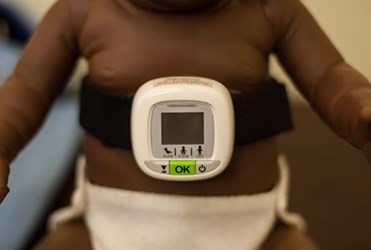
Philips is launching a diagnostic device that monitors and measures breath sounds of patients suspected to have pneumonia. The device is named The Children’s Automated Respiration Monitor (CARM) which is aimed to end preventable childhood deaths by 2025.
In 2005, Philips launched Philanthropy as well as sought advice from leading non-governmental organizations (NGOs) on where and how they might make the most impact. They learnt that fast breathing is a symptom of childhood pneumonia. One method of diagnosing pneumonia in less developed countries is by using an acute respiratory infection (ARI) timer and counting breaths, which is not credible enough. Hence, Philips aims to develop a device that could make diagnosing pneumonia more accurate.
Instead of listening for breaths, the CARM uses accelerators to convert chest movements into breath counts using specially developed algorithms. The device meets all guidelines outlined by the WHO’s Integrated Management of Childhood Illness.
Experts also claim that the device has the potential to reduce antibiotic waste and overuse, which can lead to the proliferation of antibiotic-resistant bacteria.
In February, Philips joined the United Nations’ Every Woman Every Child (EWEC) initiative to improve the lives of three billion people per year by 2025. Since the launch of EWEC in 2010, more than 100 organizations and 40 countries have joined and committed themselves in this project.
Currently, Philips’ device is undergoing consideration for a CE mark. The expected commercial availability is in the second quarter of 2016.
References: http://www.meddeviceonline.com/doc/philips-launches-wearable-diagnostic-device-to-combat-children-s-pneumonia-0001
World Pneumonia Day 2015 is Stronger than Ever
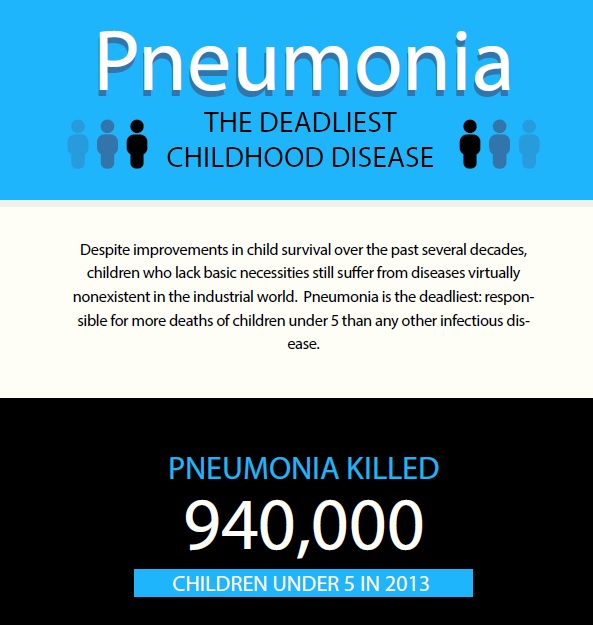
Pneumonia causes more child deaths than any other infectious disease until now. The goal for the first World Pneumonia Day, which is today, is to create awareness of the severity of the disease such as implementing solutions outlined in the Integrated Global Action Plan for Pneumonia and Diarrhea (GAPPD). This plan helps to protect and reduce cases of pneumonia in children.
Vaccines is one of the ways to prevent the spread of pneumonia. Currently, there are 132 countries which have introduced a vaccine to protect people against pneumonia. The presence of a vaccine has significantly helped to fight the battle against pneumonia. It is mandatory to develop more effective pneumococcal vaccines at affordable prices so as to ensure that people can get vaccinated.
World Pneumonia Day helps to raise awareness to how dangerous pneumonia can be and to spread the importance of getting vaccinated against the disease.
References: http://www.huffingtonpost.com/dr-orin-levine/world-pneumonia-day-2015_b_8533882.html
Tamar Braxton Disqualified From 'DWTS' After Pneumonia?

Tamar Braxton is currently battling pneumonia in the emergency room. Sadly, she may be disqualified from Dancing With The Stars due to the disease.
Tamar Braxton, 38, was hospitalised after she became extremely ill during dance practice for the Nov. 9 episode of Dancing With the Stars. A news report claimed that she has been down with pneumonia for about two weeks. Due to this emergency, she might be disqualified for the show.
References: http://www.tmz.com/2015/11/09/tamar-braxton-er-dwts/
Overuse of antibiotics causes pneumonia strains to be antibiotic resistant

A study has shown that overusing antibiotics can cause pneumococci bacteria to become anti-biotic resistant, and hence the need to come up with appropriate use of vaccine and medicine against pneumonia is mandatory.
The Pneumococcal Conjugate Vaccine 13 (PCV 13) provides 81% protection cover from pneumonia, which is 8% more than the closest effective pneumonia vaccine. It was seen that pneumonia has antibiotic resistance to Penicillin and Co-trimoxazole 13% and 70% respectively.
Phase 2 of the vaccine study will take place in India for 2 years. The sample size would be 5000.
References: http://timesofindia.indiatimes.com/home/science/Overuse-of-antibiotics-evolves-pneumonia-causing-bacteria-Study/articleshow/49689942.cms
Pfizer partners with South Africa's Biovac Institute to produce pneumonia vaccine

Global pharmaceutical company (Pfizer) and South Africa's Biovac Institute has decided to work together to produce a potentially life-saving pneumonia vaccine for children.
According to the World Health Organisation, pneumonia is the leading infectious cause of death among infants. In 2013, it was estimated that pneumonia killed 935,000 children under the age of 5.
It is a five-year process, whereby they will start with packaging and labelling. After which, it will be followed with formulating the vaccines at Biovac’s Pinelands facility. A locally made vaccine was expected by 2020, with sales initially confined to the state sector. By 2020, Biovac hopes to supply the peneumonia vaccine across Africa.
References: http://www.channelnewsasia.com/news/health/pfizer-partners-with-sout/2235374.html
E-cigarettes cause lung injuries, pneumonia

A 31-year-old West Virginia woman with no prior lung disease contracted a rare form of pneumonia after inhaling vapor from electronic cigarettes.
The woman had been vaping for a couple of months before being admitted to a hospital this year with a chronic cough. According to the doctors who treated her, she went into respiratory failure and was put on a ventilator after a while.
Likewise, a 60-year-old man in Vermont suffered an acute lung injury and was diagnosed with hypersensitivity pneumonitis last year after vaping "red hot cinnamon" flavored e-cigarettes.
The two cases highlight the severity of lung injuries due to the use of e-cigarettes and other vaping devices.
High levels of diacetyl and a second chemical are known to cause permanent and sometimes fatal lung disease. Diacetyl damages the lungs' tiniest airways, leading to scar tissue buildup that blocks airflow.
Drescher and his colleague, Graham Atkins, who was also involved with the Vermont case, said they believe diacetyl may have played a role in their patient's illness. They said the man first came to the hospital with weakness, chills and a cough. He was treated with antibiotics and went home three days later feeling normal.
He returned a month later with the same symptoms, this time with a fever. He did a CT scan and it showed that his lungs that has been exposed to a chemical. When doctors asked the man what he had been doing, he said he had been vaping strongly flavored e-cigarettes beforehand.
After which, the man stopped vaping and recovered within several days. A follow-up showed normal pulmonary functioning.
References: http://www.jsonline.com/watchdog/watchdogreports/cases-tie-e-cigarettes-to-lung-injuries-pneumonia-b99606028z1-338598861.html
World Pneumonia Day: 12 November

Guidelines on first line treatment for childhood pneumonia and diarrhoea are currently ongoing in collboration with WHO/UNICEF.
One of the guidelines is that on every year, 12th November will be marked as World Pneumonia Day.
The aim of this it to emphasise the significant public health challenge that is occurring at both ends of our age spectrum. It is to raise awareness among the public to get vaccinated to prevent diseases like pneumonia. Vaccinations reduces the chances of contracting pneumonia and allow individuals to live healthier.
References: http://thenationonlineng.net/alert-on-better-treatment-of-pneumonia-diarrhoea/
New Macrolide Passes Phase III Pneumonia Test: Solithromycin structure may thwart microbial resistance

A new oral macrolide antibiotic has shown non-inferiority to fluoroquinolone in a large phase III trial involving patients with community acquired pneumonia (CAP).
Patients treated with solithromycin had an early clinical reaction rate of 78.2% opposed to 77.9% for patients treated with moxifloxacin. The data showed non-inferiority across the spectrum of a subgroup analysis that included different levels of CAP severity, ages, and history of comorbid pulmonary disease.
Results obtained from solithromycin suggests that there can be one more option for treating CAP. Additional research is needed to be done to determine whether solithromycin does in fact ward off microbial resistance more effectively than current available antibiotics for bacterial pneumonia.
Solithromycin is a fourth-generation macrolide/first-in-class fluoroketolide antibiotic that has a molecular structure made to afford greater protection against microbial resistance. In vitro and in vivo studies demonstrated activity against Streptococcus pneumoniae and extended-spectrum activity against community-acquired methicillin-resistant Staphylococcus aureus, streptococci, Haemophilus, enterococci, and Mycobacterium avium.
References: http://www.medpagetoday.com/MeetingCoverage/CHEST/54337
Pneumonia Marker Leads to Higher Readmissions
A researcher in Montreal reported that treating community-acquired pneumonia with a biomarker might not always yield positive results. Pneumonia patients with low levels of the protein procalcitonin and treated according to the protocol had higher-than-expected relapse chances. The findings are shocking because treating patients with procalcitonin, a soluble protein that plays a role in the response to severe systemic inflammation and in particular is a marker of bacterial infections, has been shown to reduce the use of antibiotics with no increase in mortality.
The current suggestion is that antibacterial treatment can be adjusted based on procalcitonin levels in patients with sepsis, as studies have proven that low levels of the protein mean antibiotic doses can be reduced without an increased risk of death.
Pneumonia patients with procalcitonin of at least 0.25 nanograms per milliliter should complete a five-day course of antibiotics no matter what.
However, antibiotics could be stopped if the level was below 0.25 nanograms per milliliter.
Reference: http://www.medpagetoday.com/MeetingCoverage/CHEST/54306
The current suggestion is that antibacterial treatment can be adjusted based on procalcitonin levels in patients with sepsis, as studies have proven that low levels of the protein mean antibiotic doses can be reduced without an increased risk of death.
Pneumonia patients with procalcitonin of at least 0.25 nanograms per milliliter should complete a five-day course of antibiotics no matter what.
However, antibiotics could be stopped if the level was below 0.25 nanograms per milliliter.
Reference: http://www.medpagetoday.com/MeetingCoverage/CHEST/54306